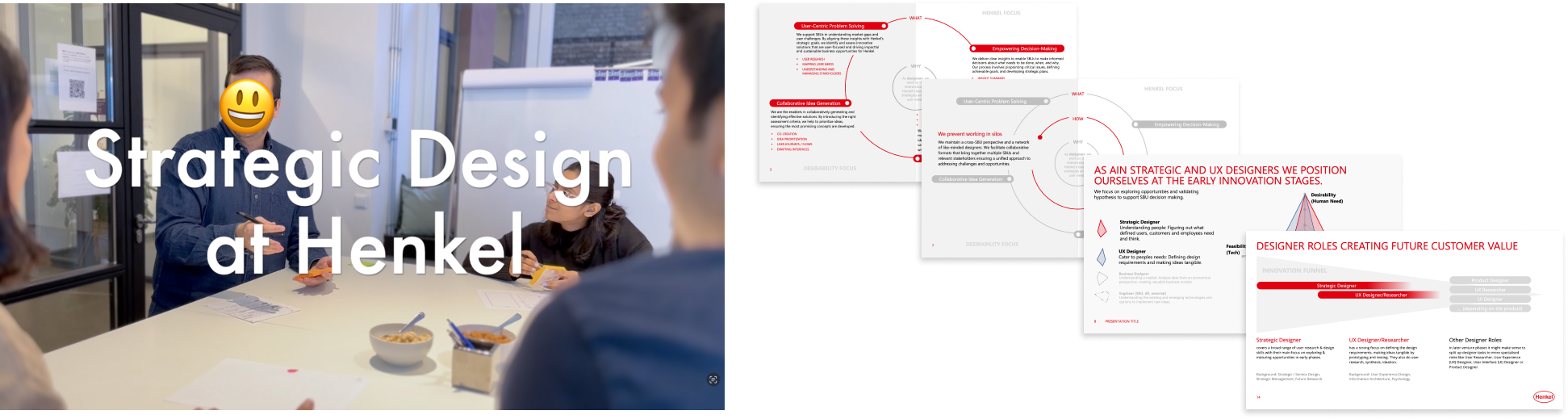
In a traditional corporate environment like Henkel, designer roles are rare and mainly situated within IT. In the innovation unit, our roles were new and not widely known. To increase awareness, grow our network, and amplify our impact, we launched a campain to introduce ourselves, share expertise, and showcase project successes.
To engage the broader workforce–the people we may collaborate with in the future–we gave talks and engaged at events. I co-presented at a learning festival and product community of practice meeting, sharing our approach to product discovery, the importance of user research, and guiding questions as a quick-start tool for any project.
To connect with middle management and leadership–the decision makers responsible for bringing us into projects–we created a video, which I directed and edited, along with a slide deck that demonstrated our capabilities and highlighted the different designer profiles within the team.
I have a strong intrinsic motivation to foster collaboration and professional growth in teams; that’s why I have always been involved in providing training and adopting new best practices and tools.
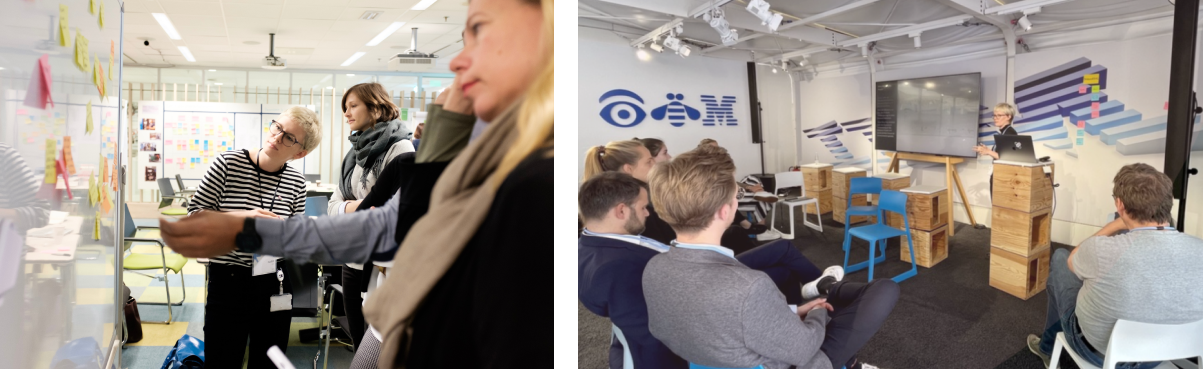
Co-leading the Design Thinking Chapter in Berlin for over three years, I was responsible for keeping the Design Thinking practice up-to-date in our studio. The responsibility also included facilitating training, establishing meeting formats for practitioners, and reporting from and to IBM’s international EDT chapter organization.
My former colleague Markus and I shared some of our insights from the pandemic period in an article published on PAGE Online.
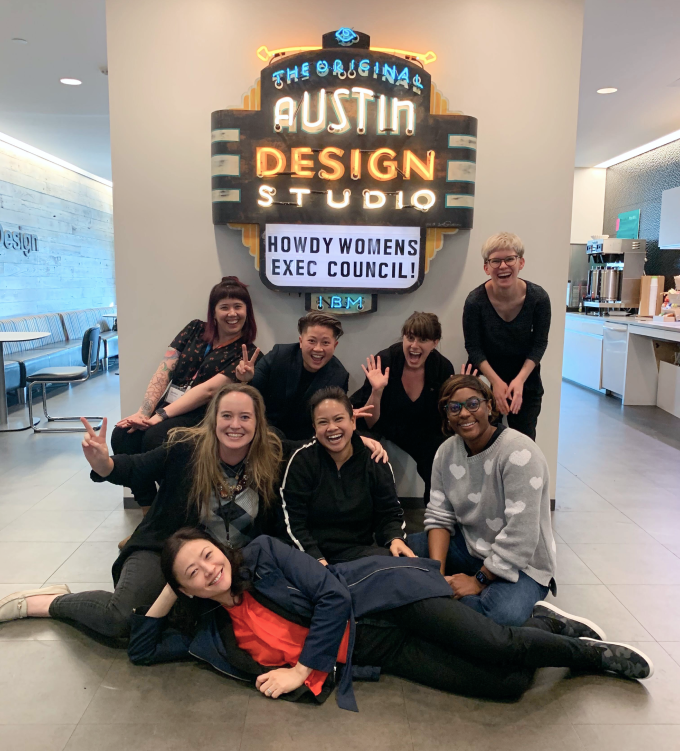
A personal highlight was connecting and co-facilitating the women execs council's EDT workshop and seeing the impact of the practice in the international IBM context. Meeting these great female leaders and putting our tools into practice to ideate on our future organisation gave me a boost of motivation and trust in the methods.

Visit Credly to read more about my certified skills.
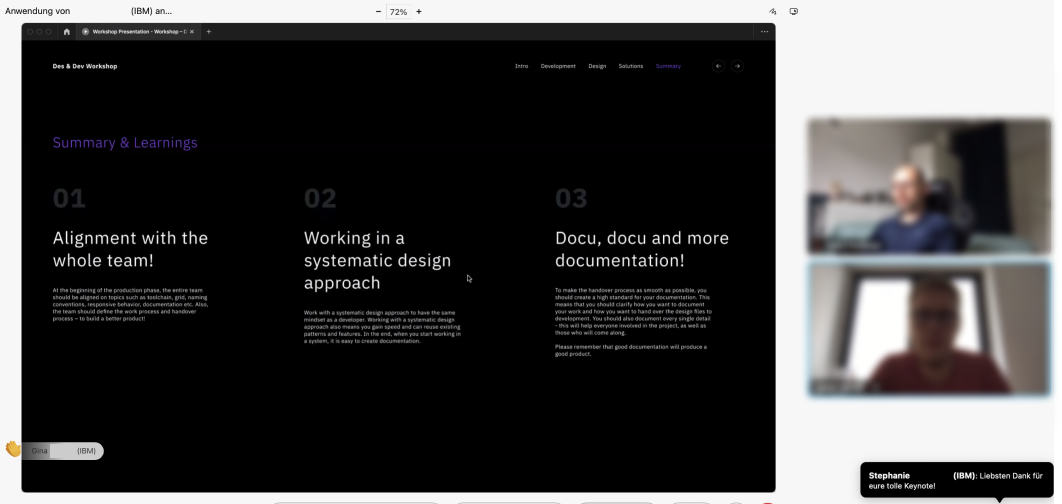
In an organization of 400+ employees at the IBM studio in Berlin, we had a formalized way to develop new skills, create change and achieve internal goals: focus topics. Our goal in 2021 was to make the two disciplines feel less separate, reduce communication barriers and enable more effective collaboration and handover.
Fueled by research, an initial group of 12 designers and developers envisioned solution ideas and developed three concepts to MVP level to run the first trials in the company. The ideas include a design-development buddy model, a training format for designers conducted by front-end developers, and a hackathon.
When taking over the lead role, I established a co-leadership by engineering and design. We grew to be the most prominent focus topic in 2022, with over 20 participants. My approach is that people should have space to experiment and have fun. I encourage an honest reflection of the needs and possibilities instead of rushing into something that just looks good in the next presentation.